
Choosing the right yarn is one of the most important decisions you’ll make before starting a crochet project. With so many yarn types, weights, fibers, colors, and textures available, it can be overwhelming—especially if you’re a beginner.
The good news is that choosing yarn doesn’t have to be complicated.
Once you understand yarn weight, fiber, texture, color, and project requirements, you’ll be able to choose yarn with much more confidence.
In this guide, we’ll explain how to choose the right yarn for different crochet projects and the most common mistakes beginners should avoid.
1. Start With the Crochet Pattern
If you’re following a crochet pattern, always check the recommended yarn first.
A good pattern will usually tell you:
- Yarn weight
- Recommended yarn type
- Amount of yarn needed
- Yarn brand or suggested alternatives
- Crochet hook size
- Gauge
- Color requirements
You don’t always have to use the exact same brand of yarn.
However, choosing a yarn with a similar weight, fiber, and thickness will usually give you a result closer to the original pattern.
2. Understand Yarn Weight
One of the first things beginners should learn is that yarn weight refers to the thickness of the yarn, not how heavy the ball is.
Common yarn weight categories include:
- Lace
- Super Fine
- Fine
- Light
- Medium
- Bulky
- Super Bulky
The thicker the yarn, the larger the crochet hook you’ll generally need.
For example, delicate lace yarn requires a much smaller hook than super bulky yarn.
Beginner-friendly choice
Medium-weight yarn is often a comfortable option for beginners because the stitches are easy to see and handle.
3. Choose the Right Fiber
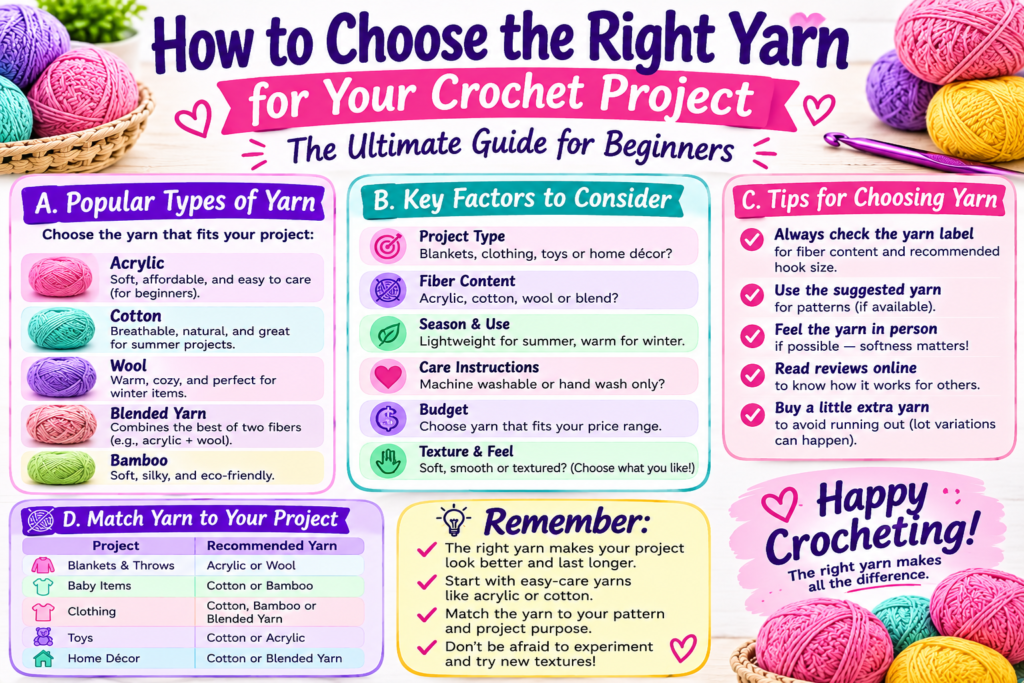
Yarn can be made from many different fibers, and each one behaves differently when crocheted.
Cotton
Cotton yarn is popular for:
- Dishcloths
- Bags
- Kitchen accessories
- Summer garments
- Home decor
It’s generally durable and doesn’t have much stretch.
Acrylic
Acrylic yarn is a popular beginner choice because it is generally affordable, widely available, and comes in many colors.
It’s suitable for:
- Blankets
- Scarves
- Hats
- Amigurumi
- Beginner practice
Wool
Wool is warm and naturally insulating, making it useful for:
- Sweaters
- Hats
- Scarves
- Winter accessories
However, some people may find certain wool yarns itchy or prefer plant-based or synthetic alternatives.
Blended Yarn
Blended yarn combines two or more fibers, such as cotton and acrylic or wool and acrylic.
These blends can combine useful characteristics from different fibers.
4. Think About the Project You’re Making
The best yarn depends heavily on what you’re creating.
You wouldn’t necessarily choose the same yarn for a summer top and a winter blanket.
For Blankets
Look for yarn that is:
- Comfortable
- Washable
- Durable
- Available in enough quantity
Acrylic and acrylic blends are popular choices for blankets.
For Clothing
Consider:
- Softness
- Breathability
- Weight
- Stretch
- How the fabric drapes
Cotton, wool, bamboo blends, and other fibers can work well depending on the garment.
For Amigurumi
For stuffed crochet toys, a smooth yarn is usually easier to work with.
Acrylic and cotton are commonly used because they allow the stitches to remain relatively easy to see.
For Bags
Durability is particularly important.
Cotton and sturdy blends can be good choices because they can create a stronger fabric.
5. Consider the Yarn Texture
Texture can completely change how easy a yarn is to crochet.
Smooth yarn makes individual stitches easier to see.
Fuzzy, fluffy, or highly textured yarn can make it difficult to identify where you should insert your hook.
If you’re a beginner, start with smooth yarn.
Once you’re comfortable reading stitches, you can experiment with textured and novelty yarns.
6. Choose a Color That Makes Stitches Easy to See
Color matters more than many beginners realize.
Very dark yarn can make it difficult to see individual stitches, especially when you’re learning.
Black, navy, and very dark brown yarns can be particularly challenging for beginners.
Instead, consider starting with a lighter or medium-colored yarn.
This makes it easier to identify:
- Individual stitches
- Loops
- Rows
- Increases
- Decreases
- Where to insert your hook
Once your skills improve, you can confidently experiment with darker colors.
7. Check the Yarn Label
The yarn label contains useful information that can help you make the right decision.
Look for:
Yarn weight: Tells you how thick the yarn is.
Recommended hook size: Gives you a starting point for choosing your crochet hook.
Fiber content: Tells you whether the yarn is cotton, acrylic, wool, or a blend.
Care instructions: Explains how the finished project should be washed and dried.
Yardage or meterage: Helps you determine how much yarn is in the ball.
Dye lot: Important when buying multiple balls of the same color.
Learning to read yarn labels is an essential skill for every crocheter.
8. Make Sure You Have Enough Yarn
Running out of yarn halfway through a project can be frustrating.
Before starting, check how much yarn your pattern requires.
Pay attention to yardage or meterage, rather than simply counting the number of balls.
Two yarn balls may look similar in size but contain very different amounts of yarn.
If you’re making a large project, it’s often a good idea to purchase a little extra yarn.
9. Don’t Forget About Gauge
The yarn you choose can affect your gauge, and your gauge can affect the final size of your project.
Even if two yarns are labeled the same weight, they may behave differently.
For projects where measurements are important, make a gauge swatch before starting.
If your gauge doesn’t match the pattern, you may need to change your crochet hook size—or choose a different yarn.
10. Consider How the Finished Project Will Be Washed
This is especially important for blankets, clothing, baby items, and frequently used accessories.
Ask yourself:
Will this project need frequent washing?
If yes, you’ll probably want a yarn that is easy to care for and suitable for the project’s intended use.
Always check the care instructions on the yarn label.
11. Think About Comfort
If you’re making something that will touch your skin, softness should be an important consideration.
For example, yarn used for:
- Scarves
- Hats
- Sweaters
- Baby clothing
- Shawls
should generally feel comfortable against the skin.
A yarn that looks beautiful in the store isn’t necessarily the best choice if it feels uncomfortable when worn.
12. Buy Yarn From the Same Dye Lot When Possible
If your project requires several balls of the same color, check the dye lot number on the labels.
Different dye lots can sometimes have slight color variations.
Buying yarn from the same dye lot helps keep the color consistent throughout your project.
This is especially important for large blankets and garments.
13. Don’t Choose Yarn Only Because It Looks Pretty
It’s easy to fall in love with a beautiful color or interesting texture.
But before buying it, ask:
- Is the yarn suitable for my project?
- Is the thickness appropriate?
- Can I see the stitches?
- Is it comfortable?
- Can I wash it easily?
- Do I have enough yarn?
A beautiful yarn that doesn’t suit your project can create unnecessary frustration.
14. Beginners Should Keep It Simple
If you’re new to crochet, you don’t need expensive or complicated yarn.
A smooth, medium-weight yarn in a light or medium color is often an excellent starting point.
It allows you to focus on learning:
- How to hold the hook
- How to control tension
- How to recognize stitches
- How to count stitches
- How to follow a pattern
Once you’re comfortable, you can start experimenting with different fibers and textures.
15. Experiment With Different Yarns
There isn’t one perfect yarn for every crocheter.
Part of becoming a better crocheter is learning how different yarns behave.
Try small projects using cotton, acrylic, wool, and blends. Pay attention to how each one feels in your hands and how the finished fabric looks.
Over time, you’ll develop your own preferences.
Final Thoughts
Choosing the right yarn doesn’t have to be complicated. Start by considering the project, yarn weight, fiber, texture, color, gauge, and care requirements.
If you’re a beginner, smooth medium-weight yarn is often an easy place to start because the stitches are visible and the yarn is generally simple to work with.
As you gain experience, don’t be afraid to experiment. Trying different yarns is one of the best ways to learn how materials affect the look, feel, and durability of your crochet projects.
The more yarn you work with, the easier it becomes to look at a project and immediately know which yarn will work best.